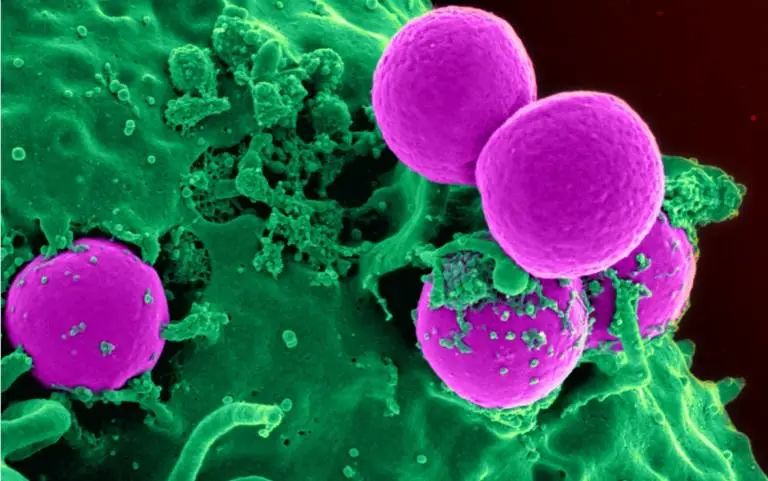


It is reported that a research team from University College London has developed an antibacterial coating that can kill bacteria when exposed to ambient light. This coating can be applied to the screens of mobile phones, keyboards, catheters and respiratory tubes to prevent the spread of diseases in hospitals and medical institutions.
This study is the first to demonstrate that the photoactivated antibacterial coating can successfully kill bacteria under low-intensity ambient light (300 lux), such as the antibacterial coating used in hospital wards and waiting rooms to prevent healthcare-associated infections. Previously, similar coatings, like those used in operating rooms, required high-intensity light (3000 lux) to activate the antibacterial properties.
The news indicates that the new antibacterial coating is made by embedding tiny chemically modified gold clusters into a polymer containing crystal violet, which is a dye with antibacterial and antifungal properties.
Dr. Gi Byoung Hwang, a chemistry doctoral student from University College London, stated that polymers such as crystal violet are widely used for wound disinfection and are excellent choices for killing bacteria and maintaining a sterile surface. When exposed to bright light, these polymers produce reactive oxygen species, which can kill bacteria by destroying their protective membranes and DNA. If combined with metals such as silver, gold, and zinc oxide, the sterilization effect will be even stronger.
Professor Ivan Parkin, the head of the Department of Mathematics and Physical Sciences at University College London, pointed out that although other types of coatings can effectively kill bacteria, this can only be achieved when exposed to harmful ultraviolet light or high-intensity light sources. They were astonished to discover that the developed coating can effectively kill Staphylococcus aureus and Escherichia coli under ambient light, indicating that this coating is very promising for application in various medical environments.
It is reported that the research team used an expandable method to create an antibacterial coating and tested its effectiveness in killing Staphylococcus aureus and Escherichia coli under different lighting conditions.
It is worth noting that this germicidal coating was discovered by the research team accidentally during the production of hydrogen peroxide. Hydrogen peroxide is a reagent used in the cleaning solution for contact lenses and is relatively mild. Its working principle is to attack the cell membrane through chemical means, so it takes a longer time to deal with bacteria that have more protective layers.
Currently, this research has been published in the journal "Nature Communications", and it has been funded by the Engineering and Physical Sciences Research Council through the "Advanced Flow Technology for Healthcare Materials Manufacturing (MAFuMa)" project.